The Founding.
A word coined in a Basque village. A game that crossed an ocean twice before it reached Miami.
In 1875, in the small Basque town of Azpeitia, a musician and poet named Serafín Baroja — father of the novelist Pío Baroja — coined the phrase Jai Alai. It means, simply, merry festival. The sport itself was older than the name. Basque villagers had been playing a wall-ball game called pilota since at least the 13th century, first with a bare hand, then with a leather glove, and finally, in 1857, with a long curved wicker basket invented by a young man named Gantxiki Harotcha in the town of Saint-Pée-sur-Nivelle. He called it a chistera. Everyone else called it the fastest thing in sport.
The game left the Basque Country twice before it arrived in Miami. First to Cuba in 1898, where the empire of Spain was losing its last colony and a group of Basque immigrants opened a fronton in Havana. Then, briefly and unsuccessfully, to San Francisco in 1901 — the short-lived Eder Jai club, remembered now only in newspaper clippings. Then, in 1904, to St. Louis, where a purpose-built six-thousand-seat fronton opened for the World's Fair — a spectacle that lasted precisely two months before it closed and was converted, ignominiously, into a roller skating rink.
Twenty years passed. In 1923, two Miami realtors named Carson Bradford and Joe Adams founded the South Florida Amusement Company. They had watched Jai Alai in Havana and believed Florida, freshly booming with tourists and pari-mutuel racing, would love it too. Their first fronton, at Hialeah, opened in February 1924 and drew crowds for two seasons before it was flattened by the Great Miami Hurricane on September 18, 1926.
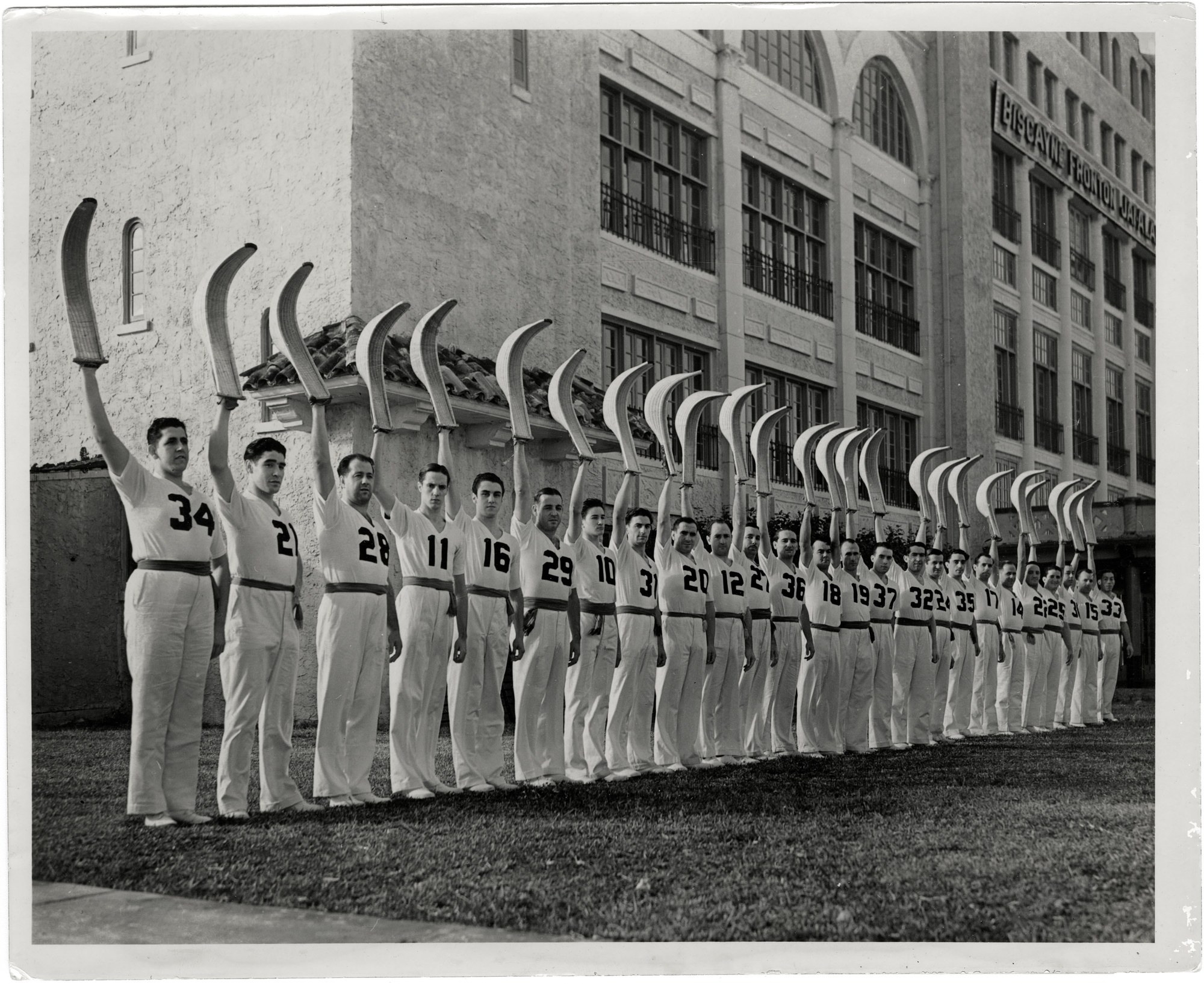
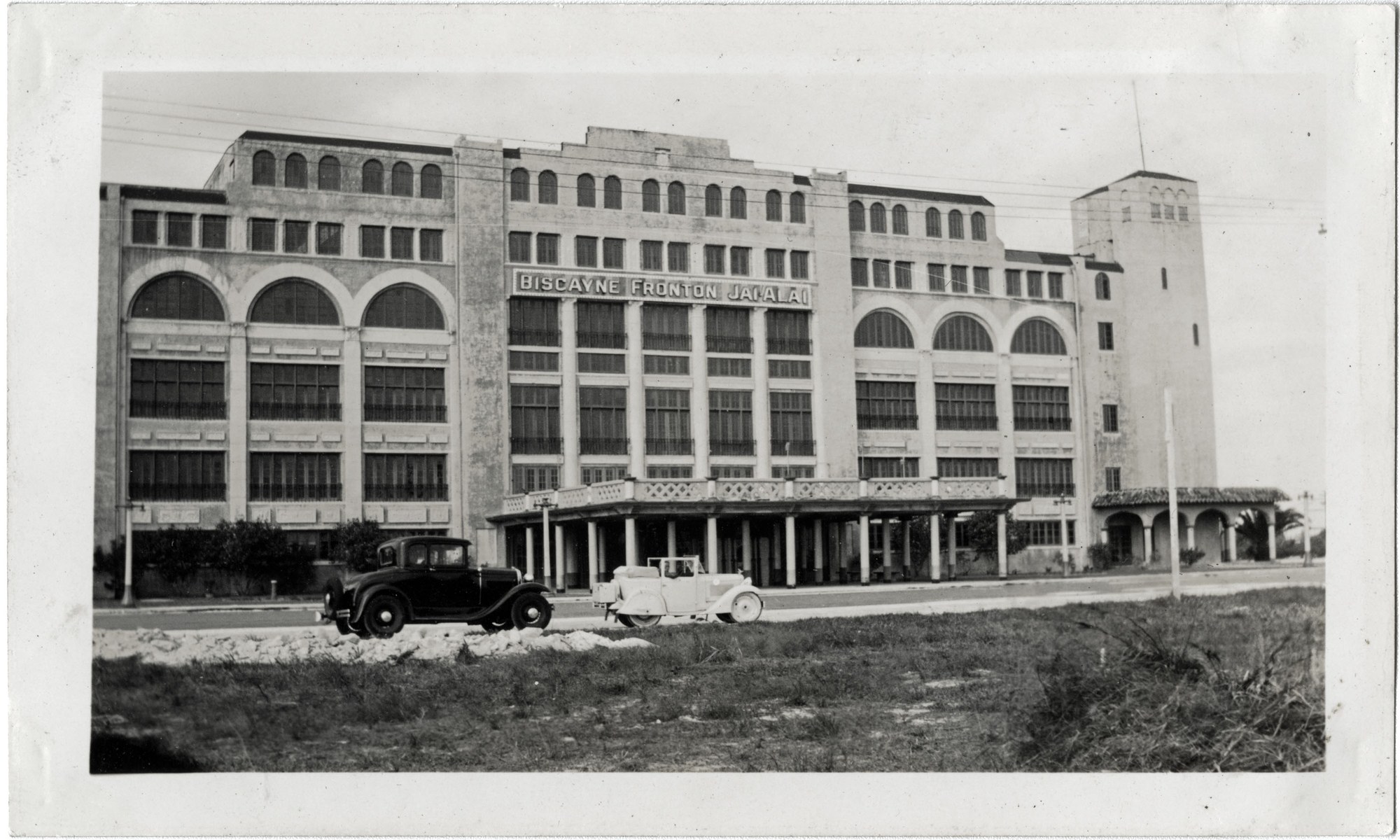
By then a second, larger fronton was rising two miles south, at the corner of 36th Street and 37th Avenue. Its lead investor was Tex Rickard — the boxing promoter who built the third Madison Square Garden and founded the New York Rangers. Rickard's building, Biscayne Jai Alai, lost its roof in the same hurricane. It opened anyway, in the winter of 1926, on time and sold out. Within a decade, sportswriters were calling it the Yankee Stadium of Jai Alai. For the next twenty-seven years, it earned the name.
That is the moment this story begins.