1926 — 2026 Celebrating 100 years of Jai Alai in Miami Read the story →
The Sport

Jai Alai.
Explained.

A 500-year-old game from the Basque country, played by six teams and watched by the world. Here is everything you need to know before the next serve.

190 mphRecord ball speed
126 ftCourt length
33Maximum points to win a match
World Jai Alai League players on court in front of the World Jai Alai League wall lockup at JAM Arena in Miami.
01

The basics.

Two players. One wicker basket. One hand-wound ball moving at highway speeds off a granite wall. Sets are played to six points, best two of three.

Jai Alai — zesta-punta in Basque, meaning "basket tip" — is a variant of pelota, a family of court games that originated in the Basque region of Spain and France in the 13th century. The modern version, played with a curved wicker glove called a cesta, was invented in Guipúzcoa in the 1850s. Spanish speakers picked it up. So did Cuba, then Mexico, then Miami — where the first professional fronton opened in 1926, exactly one hundred years ago.

At its core, the game is simple. A player hurls a ball at a front wall with a woven basket strapped to their arm. The ball caroms off. The next player has to catch it in their own cesta and throw it back — in one continuous motion, on the fly or after a single bounce — before it hits the floor. Miss and the other side scores.

That is Jai Alai in one paragraph. Everything else is the pursuit of speed.

02

Rules of the match.

1

Two-player teams

In the World Jai Alai League, every team is a pairing: the frontcourt player starts every point with the serve; the backcourt player covers the back wall. Chemistry matters.

2

Serve to score

The serve starts each point. The server bounces the ball once, catches it in the cesta, and throws it to the front wall so it lands in the fair zone between lines 4 and 7. Do it wrong and the point starts over. Do it twice wrong and it's a fault.

3

One touch, one throw

You cannot cradle, carry, or hold the ball. Every catch must be immediately followed by a throw in a single fluid motion. Any pause is a foul — and you lose the point.

4

One bounce max

The ball may hit the floor once between a wall strike and the return. Two bounces is a lost point. Catching on the fly is legal and often preferred — the ball moves faster before it slows down on the granite.

5

Fair territory

The ball must hit the front wall above the 3-foot foul line and below the ceiling on every shot. It must return to the floor between the front and back walls and between the side wall and the safety line. Anywhere else — out.

6

Best two of three

World Jai Alai League matches are sets to six points, best two of three. Points are scored on every rally — no side-out. Average match length: 3 hours. Traditional Basque frontons play to 7 or 9 in a serve-only format. We modernized the count for TV.

03

The court.

A three-sided court — 126 feet long, 30 feet high — with a granite front wall, concrete side wall, and glass back wall. One side is open with protective netting for spectators.

Jai Alai court diagram BACK WALL FRONT WALL 3 FT FOUL LINE SIDE WALL 1 2 3 4 5 6 7 8 9 10 11 12 13 14 SERVE ZONE LINES 4 — 7 126 FT · 38 M END TO END OPEN SIDE — SPECTATORS BEHIND MESH NET

Three walls

A Jai Alai fronton has three walls: a granite front wall, a concrete side wall on the left, and a glass back wall 126 feet away. The right side is open — that's where the fans sit, safely behind a mesh net.

Fourteen lines

Fourteen parallel lines run the length of the floor, numbered 1 (nearest the front wall) to 14 (nearest the back). They're used for calling faults, spotting serves, and ranking replays. Every serve must land in the zone between lines 4 and 7.

JAM Arena

The World Jai Alai League plays every home match at JAM Arena in Miami — the historic Miami Jai Alai fronton, the birthplace of the sport in America and its home for one hundred years.

04

The cesta.

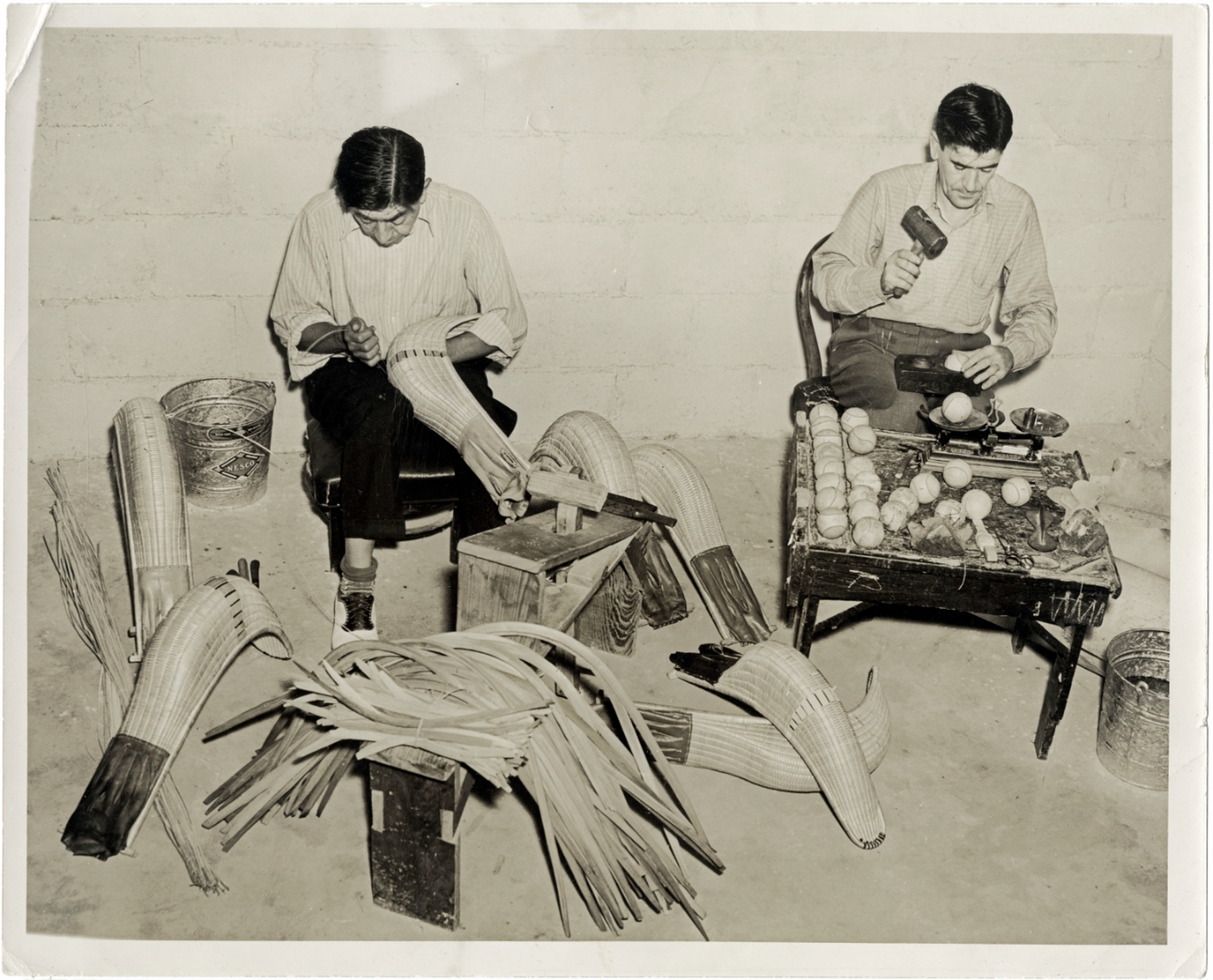
Historic archival photograph of Basque craftsmen hand-weaving cestas and finishing pelotas.
The cesta · hand-woven wicker basket

The single most beautiful piece of equipment in modern sport.

A curved, hand-woven wicker basket strapped to the player's right forearm. It catches the ball and hurls it back — creating throws faster than any other ball sport.

The basket's curve is what makes the game possible. It amplifies the arm's throwing motion into a slingshot. Jai Alai holds the Guinness World Record as the fastest ball sport in the world — with a recorded top speed of 190 mph set by Ibon Aldazabal of Spain on November 24, 2017.

60 cmTotal length
4 moTo weave one
$1,800Cost per cesta
3Master weavers left

Every cesta on the World Jai Alai League court is hand-made by one of the few remaining master weavers still practicing the craft.

05

The ball.

A dense white ball, about the size of a lacrosse ball and harder than a golf ball.

With recorded speeds over 180 mph, Jai Alai still holds the Guinness World Record as the fastest ball sport in the world. The current mark of 190 mph was set by Ibon Aldazabal of Spain on November 24, 2017.

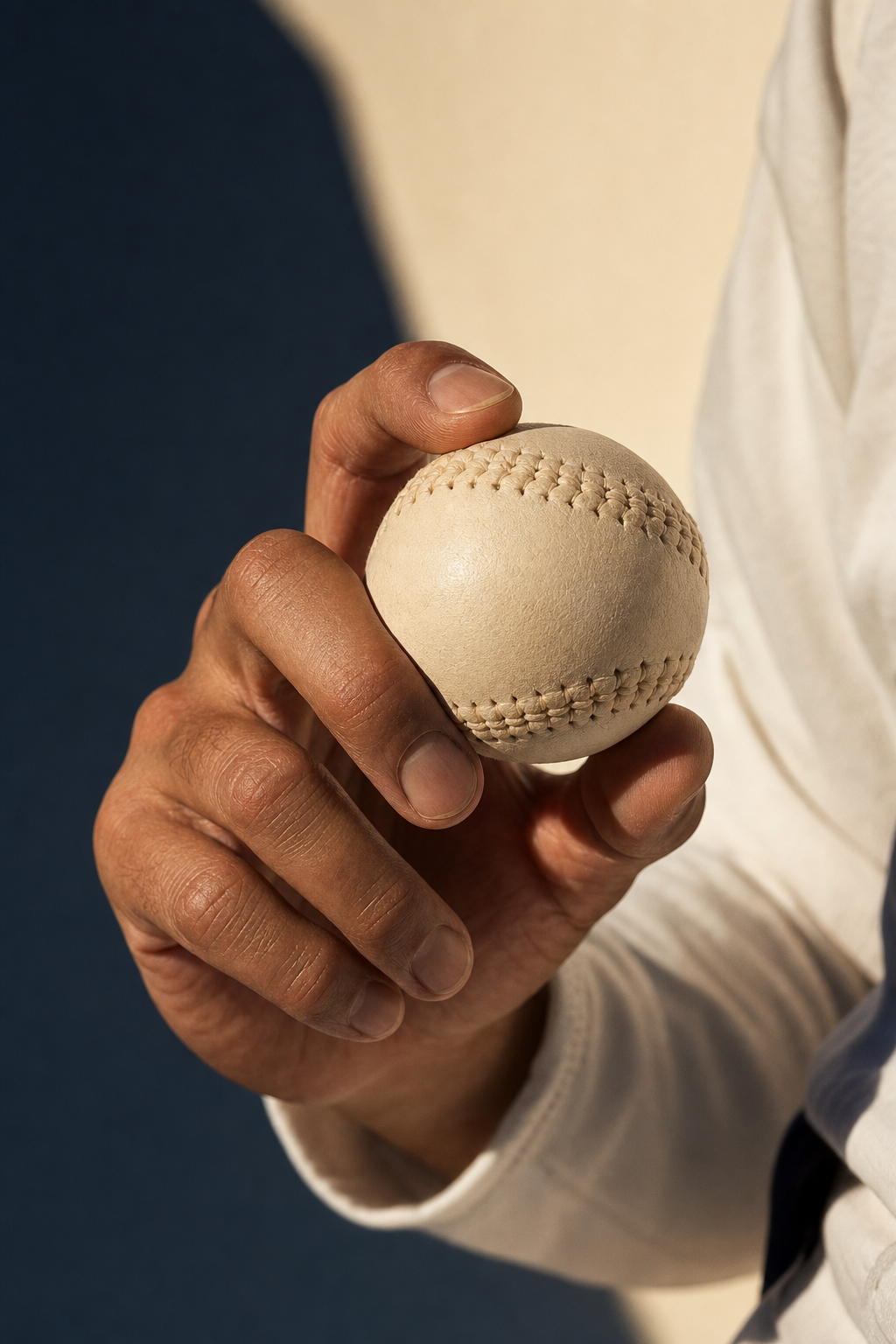
The ball is a hand-wound sphere — dense, layered, and finished by hand. When the outer cover tears open under repeated impact, the ball is retired. Balls are replaced regularly during a match.

Diameter5 cm · 2 in
Weight128 g · 4.5 oz
Lifespan~15 minutes
Top speed190 mph
Record holderIbon Aldazabal · 2017
HardnessHarder than a golf ball
A Jai Alai pelota held between fingers
The ball · hand-wound & hand-finished
06

Glossary.

Every word you'll hear a broadcaster say — in Basque, Spanish, or English — and what it actually means.

The game

Jai Alai /ˈhaɪ.əˌlaɪ/
Basque for "merry festival." The name of the sport, coined by writer Serafín Baroja in 1875.
Zesta-punta /ˈses-ta ˈpun-ta/
Basque for "basket tip." What the sport is called at home in the Basque country.
Cesta punta /ˈses-ta ˈpun-ta/
The Spanish spelling. Same sport, same meaning. Both are correct.
Pelota /pe-ˈlo-ta/
The ball. Also the broader family of Basque handball sports the game descends from.
Fronton /fron-ˈton/
The three-walled court. Also the name for the venue itself. Miami Fronton, Dania Fronton, JAM Arena — all frontons.

The players

Delantero /de-lan-ˈte-ro/
Frontcourt player. Serves the ball and covers the shots that come off the front wall. The fast one.
Zaguero /sa-ˈge-ro/
Backcourt player. Covers the rebote and returns long balls. The strong one.
Pelotari /pe-lo-ˈta-ri/
A professional Jai Alai player. Plural: pelotaris.
Cestero /ses-ˈte-ro/
A cesta weaver. Currently three left worldwide.

The court

Frontis
The front wall. Granite, 40 feet high, painted with numbered vertical lines.
Rebote
The back wall, 176 feet from the frontis. Also the term for a ball that comes off the back wall.
Lateral
The left side wall. Granite, full length of the court.
Cancha
The playing floor. Traditionally polished granite, now a specialized composite at JAM Arena.
Contracancha
The narrow strip between the safety line and the open right side. Ball lands here — out.

The shots

Saque
The serve. Must land between lines 4 and 7.
Arrimada
A shot placed intentionally close to the side wall — a "kiss" that skims and dies.
Cortada
A cut shot with heavy backspin — the ball drops sharply after hitting the front wall, forcing the returning player to reach low.
Chula
A ball that dies in the corner where floor meets back wall. Nearly always unplayable — an automatic point.
Dejada
A soft drop shot. When it lands right, the ball barely bounces.
Costado
A backhand shot off the side wall. Elegant. Difficult. Applause-worthy.

The calls

Bote pronto
A double-touch or held ball — an illegal catch-and-hold. Point to the opponent.
Falta
Fault. Two in a row on the serve and the receiving team scores.
Pasa
A short serve that fails to reach line 4. Replay the first, lose the point on the second.
Ace
A serve that scores untouched — the ball strikes the front wall and lands cleanly in the fair zone before the opponent can react.
Rally
A single exchange from serve to point — the fastest reflex game in team sport.

The culture

Boina
The traditional flat Basque beret. Optional for players, mandatory for spectators over 60.
Ikurriña
The Basque flag. Flown at every JAM Arena match alongside the American flag.
Faja
The red sash tied at the waist. Traditional Basque. Every World Jai Alai League player wears one.
Aupa
Basque for "let's go" — a common cry heard at frontons before a serve or a big point.
07

Records worth knowing.

A hundred years of professional Jai Alai in Miami. A few numbers stand above the rest.

RecordValueHolderWhen
Fastest ball ever thrown 190 mph Ibon Aldazabal · Spain Nov 24, 2017 · Guinness World Record
Largest Jai Alai crowd 15,502 Miami Jai Alai Fronton Dec 27, 1975
Miami fronton opening 1926 Miami Jai Alai Fronton · 3500 NW 37th Ave The oldest fronton in America
Longest strike in American pro sport 3 yrs Jai Alai players' strike 1988–1991
Return of Jai Alai to its historic home 2026 JAM Arena · Miami Reopened Feb 13, 2026

See it in person.

The next home match is at JAM Arena. Doors open two hours before the first serve.